Where Students Go to Relive Their Favorite School Memories
Think about the last time a student wanted to revisit a memory.
Maybe it was a photo from homecoming.
A video from a championship game.
A clip from the school talent show.
Where did they look?
For most students, the answer is simple.
Their phone.
That's not because students care less about memories than previous generations.
In many ways, they care more.
They just access those memories differently.
Today's Students Live on Their Devices
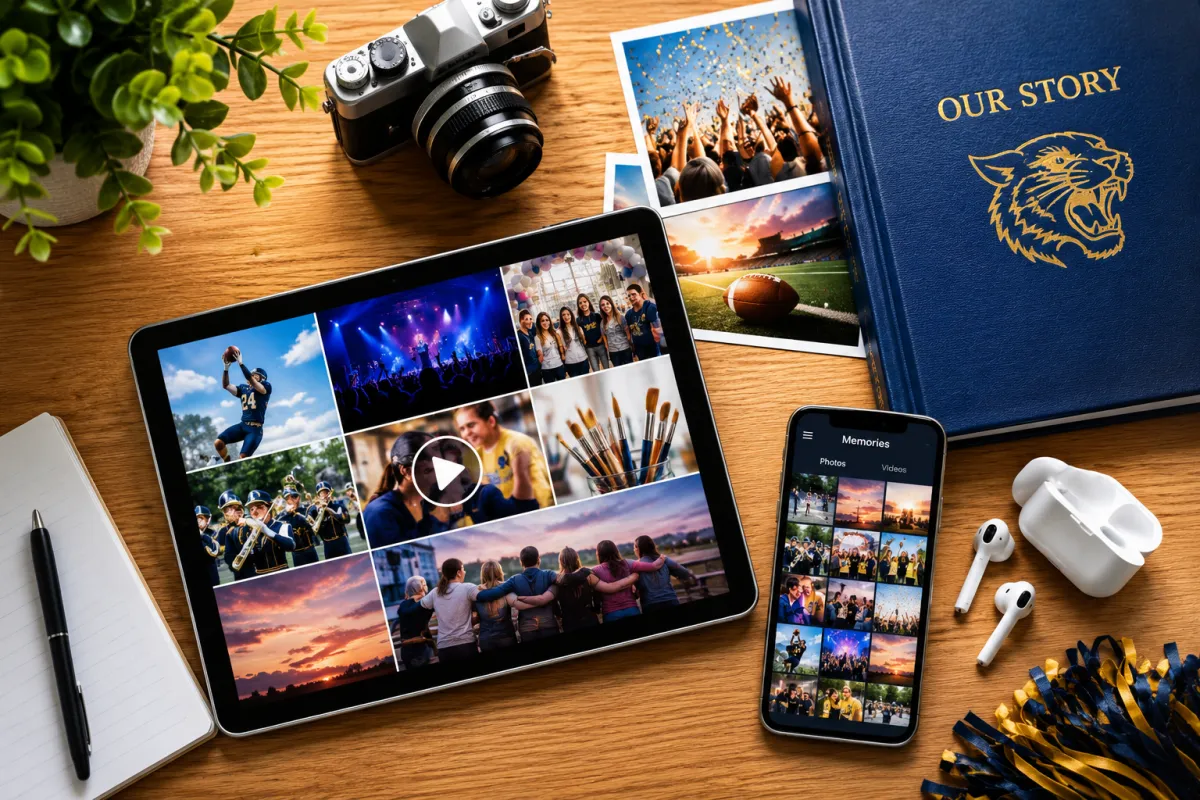
Whether it's photos, videos, music, or messages, students are used to having their favorite content available instantly.
A few taps and they're watching a video from last weekend.
Scrolling through photos from a recent event.
Or sharing a memory with a friend.
This isn't a trend.
It's simply how students interact with information and experiences today.
When schools think about preserving memories, it's worth considering how students naturally revisit them.
Photos Are Still Important. Videos Matter Too.
A great photo can capture a moment.
A great video can capture the energy around it.
The crowd cheering after a touchdown.
The standing ovation after a performance.
The laughter during a school event.
These are memories students often return to because they help recreate how the moment felt.
That's one reason schools are increasingly looking for ways to preserve both photos and videos as part of the yearbook experience.
Every memory tells a story.
Some stories are best told through a photograph.
Others come alive through video.
Imagine watching the winning goal instead of only seeing the final shot.
Or hearing the applause after a theater performance instead of simply reading about it.
Photos preserve what happened.
Videos help preserve how it felt.
The Goal Hasn't Changed
Yearbooks have always existed for one reason.
To help students remember.
That purpose remains just as important today as it was decades ago.
What has changed is how students access and interact with memories.
Students revisit photos, videos, and messages every day because they're available wherever they go.
The easier school memories are to revisit, the more likely students are to return to them years later.
And that's ultimately what every school wants.
A yearbook that continues to matter long after the school year ends.
Looking Ahead
Students still want to celebrate their school experiences.
They still want to remember the people, events, and moments that shaped their year.
The difference is that today's students expect those memories to be accessible, engaging, and easy to revisit.
As schools continue exploring the future of yearbooks, understanding how students interact with memories today can help create experiences they'll value for years to come.
The goal isn't to change what a yearbook represents.
It's to ensure those memories remain meaningful and accessible for the next generation of students.
Ready to Create a Yearbook Students Will Revisit?
Pixel Yearbooks helps schools preserve photos, videos, and school memories in a fully digital yearbook experience designed for the way students engage with content today.
From homecoming and graduation to everyday moments in the classroom, students can revisit the memories that shaped their year from virtually any device.
👉Visit pixelyearbooks.com to learn how your school can create a yearbook experience that students will return to long after graduation.